


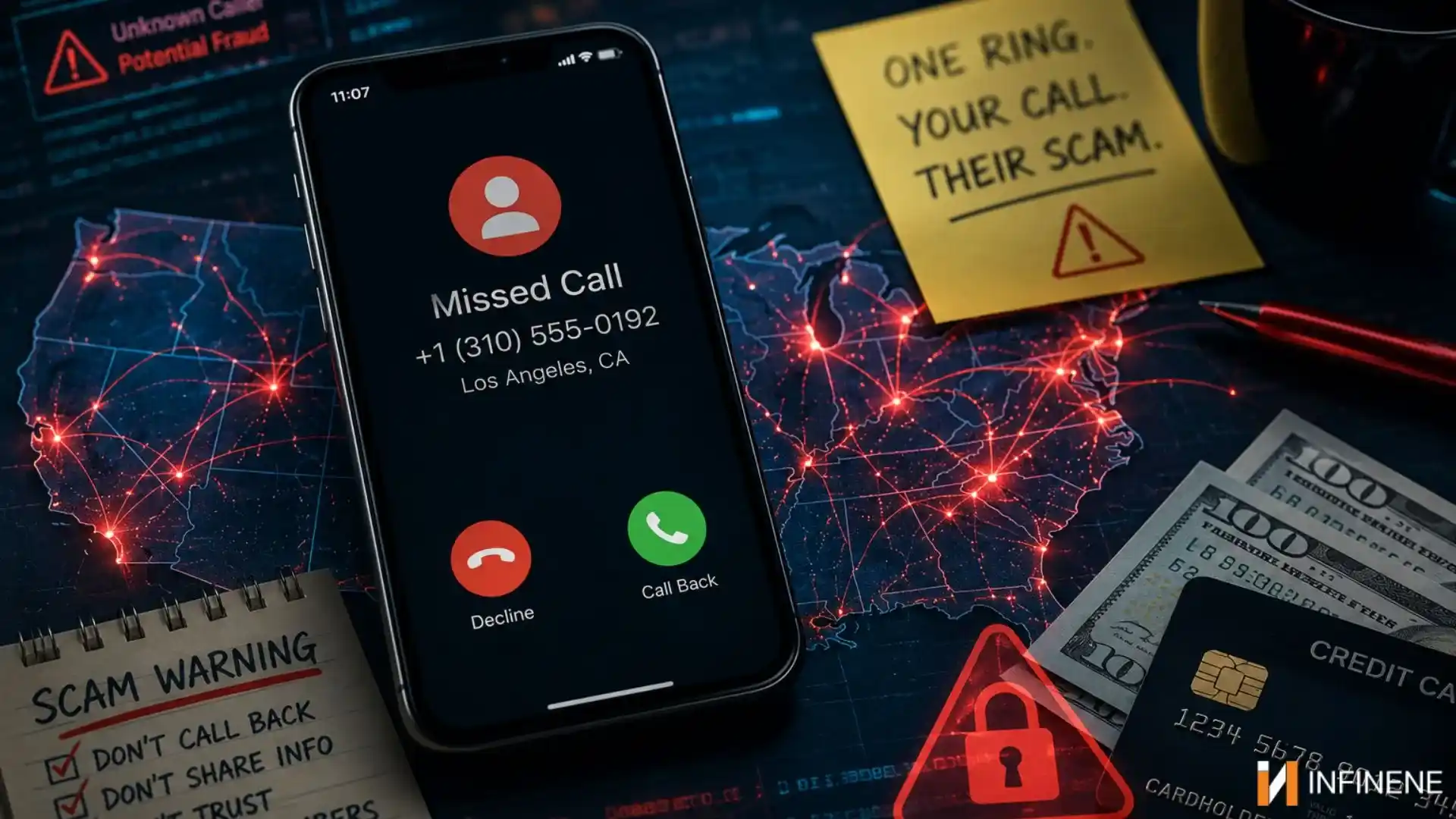
If you have recently come across random one-ring calls from unfamiliar numbers, you are not alone. The missed call scam is rising in the US. It is targeting regular smartphone users, remote workers, and even small businesses. The seemingly harmless missed call is actually a carefully planned scam.
Your phone rings once and then immediately stop. No voicemail. No text. Just an unknown number, triggering your curiosity. Many Americans instinctively call back out of curiosity or concern. That is exactly what scammers are hoping for.
A single callback can open the door to privacy risks, financial fraud, and ongoing spam targeting. Here’s what the latest missed call scam really is and how you can protect yourself before curiosity turns into a costly mistake
The missed call scam is essentially a modern version of the old “one-ring” scam. But now it is powered by automated dialing systems and internet-based calling tools that can blast out thousands of calls in a very short time.
Scammers don’t expect you to pick up. Instead, they let the phone ring just once or twice and then immediately disconnect. That short ring is intentional. It creates just enough curiosity or concern without giving you any information to judge whether the call was legitimate.
The entire setup is built around one psychological trigger. And that's curiosity.
The goal is to get you to call back.
Once you return the call, things can go in risky directions. You may be charged or the scammers can access your personal information. It could also lead to ongoing Voice phishing attempts.
To make this more convincing, scammers often use caller ID spoofing. That means the number displayed on your phone looks local. But in reality, the call could be routed through overseas VoIP systems. This is deliberate because people are far more likely to trust and return a number that “feels” familiar.
In short, the missed call isn’t random at all. It’s the bait. The real risk begins the moment you decide to call it back.
Phone scams in the US aren’t new, but what’s changed is how sophisticated and low-effort they’ve become. Today’s missed call scam is powered by modern internet-based calling systems (VoIP and AI tools that allow fraudsters to hide their identities. Scammers no longer need expensive equipment or complex setups. With basic software, they can generate thousands of calls in minutes. Several real-world factors are making this scam rise across the United States:
Most Americans already receive a constant stream of spam and robocalls every week. Because of this, a scam “one-ring” call doesn’t stand out. It blends into the background noise of everyday phone activity.
Another reason is the rise of remote and hybrid work. Americans now rely heavily on mobile phones for everything. Be it job interviews, client calls or delivery updates. Because of this, an unknown call feels more “normal” than suspicious. Scammers exploit this expectation gap perfectly.
On top of that, people today are conditioned to answer or return unknown calls. Thinking, it might be a delivery driver, a recruiter, or a doctor’s office. This creates a psychological blind spot where users assume “it might be important,” even when the number is unfamiliar.
Automated dialing tools are extremely cheap and scalable now. Scammers can blast millions of random numbers in the US within hours, then track who calls back. Once someone responds, that number is flagged as “active,” which makes it more valuable for future scams or data resale.
Unlike traditional robocalls that immediately try to sell something or play a recorded message, the missed call scam tactic is more subtle. It doesn’t push you. It pulls you in. It relies on curiosity and habit. A small psychological nudge is enough to get you to engage.
Typically, scams come into effect when you receive a call. But in this case, the risk starts when you return the call, not when you receive it.
Some of these scam numbers are deliberately routed through premium international gateways or high-cost telecom services. The call appears as a standard missed call. But when you return the call, your connection will be sent through a cost-based system which charges customers for each minute. The tricky part is that nothing feels “off” during the call. So people assume it’s safe until the phone bill arrives and shows unexpected international or premium charges that were never clearly disclosed.
Scammers find better value from callbacks because it proves that they have tried a genuine phone number. They treat active phone numbers as proof of valid business leads. Your number can be entered into extensive spam databases that can be used in different scam operations. The underground marketplaces can also sell this information after contact existence confirmation. People experience a sharp increase in robocalls, spam text messages and phone calls from unknown sources once they have been engaged in one such incident.
The callback system connects you to either a live agent or an automated system that impersonates a trustworthy organization. They operate from official accounts to use pressure methods. They usually use claims like "your account is compromised" or "immediate action required". The attackers aim to extract sensitive information which includes bank details, passwords and verification codes. They create urgency for their benefit.
The missed call scam trend in the United States has moved forward with the use of artificial intelligence technology to commit deceptive practices. The system enables users to record brief dialogues which developers can use to extract vocal characteristics and speaking patterns. This data can be used to create synthetic voice scams which enable criminals to impersonate your voice for fraudulent activities against banks and your personal acquaintances.
Not every unknown call is dangerous. But the missed call scam trend has some clear patterns you can watch for. These scams are designed to look casual. However, a few small signs usually give them away.
Phone rings only once: This is one of the most common tactics. The call disconnects quickly to trigger curiosity and push you to call back without thinking.
No voicemail or context left behind: Legitimate callers usually leave a voicemail or follow-up message. Scams typically don’t.
Immediate request for personal information on callback: If you call back and are quickly asked for sensitive details like OTPs, bank info, passwords, or Social Security numbers, it’s a major red flag. Real companies don’t operate this way.
Unusual or international-looking numbers: Many missed call scam operations use spoof caller IDs or international routing that looks unfamiliar or slightly “off” compared to standard US numbers.
The missed call scam works because it looks harmless. But once you understand how it’s designed, it becomes much easier to avoid it. The safest approach to the trend of missed call scams in the US is to treat unknown missed calls as something that needs verification, not immediate action. These scams are designed to work on instinct. Slowing that reaction down is enough to break the scam completely.
A missed call from an unknown number is rarely something that requires instant action. Scammers rely on that split-second decision where you think, “What if it’s important?” In reality, legitimate organizations don’t usually depend on a single unanswered ring. If it truly matters, they will call again or follow up through text or email.
Before doing anything, look up the number online. This is one of the quickest ways to identify patterns in the missed call scam in the US ecosystem. Many scam numbers are usually flagged by other users. They are also sometimes in the spam reporting databases. If there are multiple reports, it’s a strong signal to avoid engaging.
Modern smartphones are built with security in mind. If the number feels suspicious, report and block it immediately. It will not only protect you from repeated attempts but also help improve spam detection systems. So, marking a number as spam contributes to shared protection across users.
US carriers now actively monitor suspicious call behavior and flag potential spam. These systems use large-scale data patterns to detect fraudulent calling activity. You can strengthen this protection further with third-party apps. These apps identify known scam numbers and block them in real time.
Software updates have a crucial value because they deliver essential solutions to newly discovered fraud methods. The attackers behind the missed call scam now use VoIP spoofing and automated dialing as their primary method of operation. The maintenance of your device and security tools through regular updates functions as a solid defense against these attacking methods.
For businesses, missed call scams become an entry point for fraud. Companies are increasingly targeted through fake vendor callbacks, employee impersonation, and broader social engineering attacks. These scams often don’t require hacking systems directly. They exploit human behavior instead. A single employee returning a spoofed missed call or sharing basic verification details can unintentionally expose internal systems or customer data. That’s why phone-based trust is now considered a cybersecurity risk.
The latest missed call scam in the US proves that modern cyber threats no longer rely solely on emails or fake websites. Sometimes, just a single ring is enough to con you.
We need smarter digital protection strategies to cope with the advanced fraud tactics. Awareness and a strong cybersecurity infrastructure are essential to survive in this connected world. If your business wants to strengthen its security systems or build a safer digital communication infrastructure, partnering with a trusted technology solutions provider is a smart choice.
At InfineneTech, we help businesses secure their digital ecosystems with modern technology solutions. We provide cybersecurity support, scalable infrastructure, and smart IT services designed for today’s evolving threat landscape.