


Blog Details
HomeBlog Details
What Is the Millennial Pause? Meaning, Examples & Why It Matters
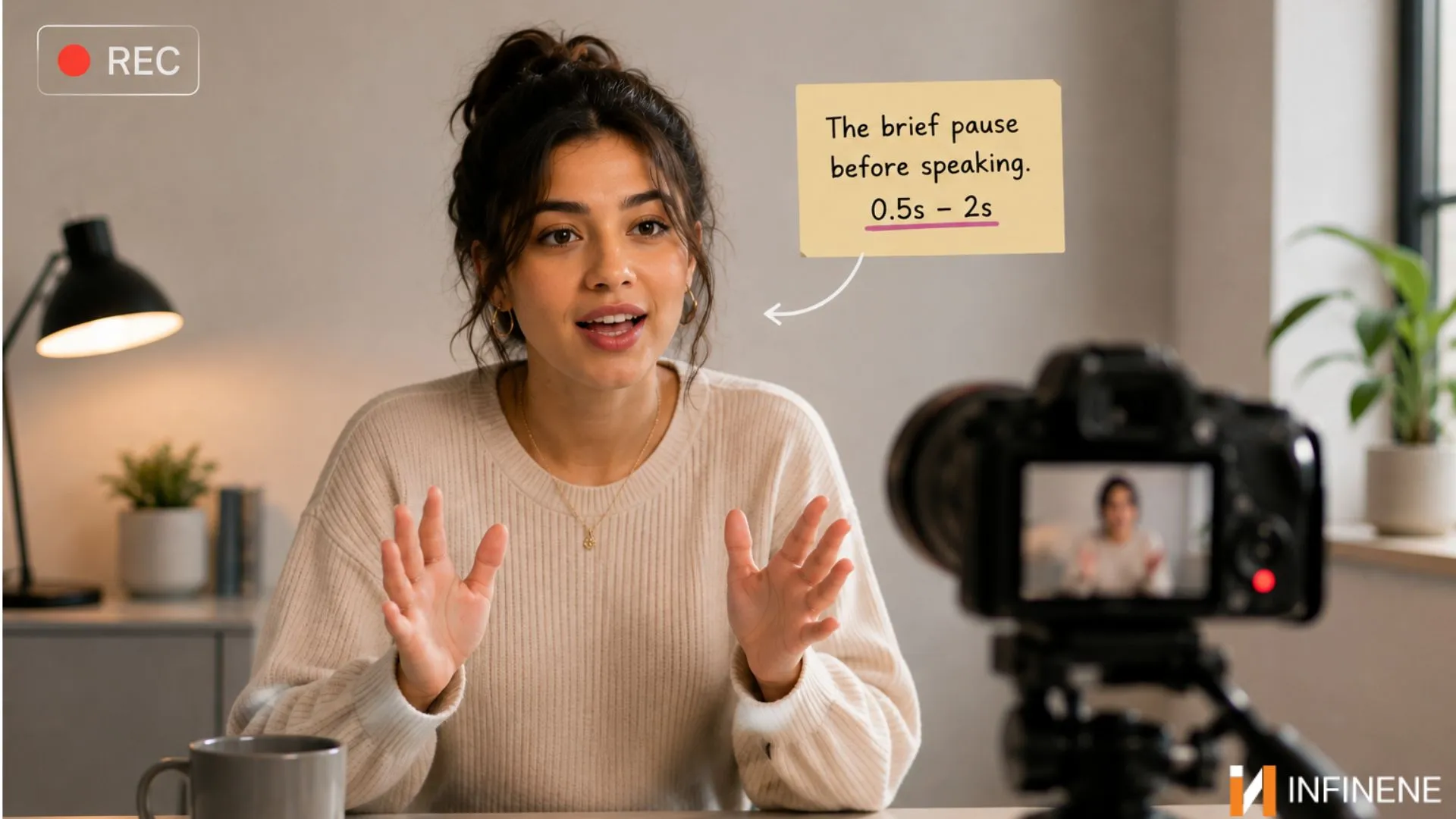
You must have noticed it many times. When someone hits the record button to make a video and the little red dot appears. And then nothing happens for a second. Maybe two. You glance down at the screen, just to make sure it's actually recording. Then you start talking. "Okay, so..." That small gap has a name now. It's called the millennial pause, and once someone points it out to you, you start seeing it in almost every video. This is a habit rooted in the early and unreliable days of digital video. It shows up everywhere from TikTok confessionals to LinkedIn intros. It's become a genuine marker of generational video style.
In this guide, we'll break down where the millennial pause came from. What it looks like in practice and how it compares to Gen Z's jump-straight-in approach. We will also dissect what it means for brands trying to hold attention in the first second of a video.
What Is the Millennial Pause?
Millennial pause is the brief stop in the video recording. It is usually about half a second to two seconds right after you tap the record button. And you have not said anything yet. You notice it a lot in TikTok and Instagram clips. In many of those, the creator is a millennial. Most of the time they do not notice it at all. It's not written into the video. There's no reason for it anymore. It's just left over.
That's the short answer to what is the millennial pause. The millennial pause meaning, in plain terms, comes down to one thing. It's a habit of double-checking the camera before speaking. It's held over from a time when double-checking was actually important.
Where Did the Millennial Pause Come From?
The name is tied to one moment from November 2021. A TikTok user with the handle @nisipisa shared a clip. In it, they pointed out that Taylor Swift takes a brief pause before she begins speaking in her videos. Not once. Every video. The observation spread fast, partly because it was funny, and partly because everyone who saw it realized they did the exact same thing.
But the habit is older than the joke by a good twenty years. If you ever used a camcorder, or one of the first digital point-and-shoot cameras from the early 2000s, you know why the pause exists. Those cameras were slow. You would hit the record button, but there was a delay before it actually began. Sometimes the press would not go through, and you would only find out later. After you get home, you get to know that the video never started. So, people learned to build in a buffer. Press record. Wait a moment. Check that the small light turned on, or confirm the timer actually began. Then speak. If you skip that step, you might not catch the start of what you meant to say.
On a new phone, that delay is not really a thing. An iPhone or a Pixel starts recording the instant you tap the button. There's nothing to wait for. But the generation that learned to double-check on old hardware kept the habit going even after the hardware caught up. That's the whole story. It's not really about millennials being awkward on camera. It's a leftover reflex from equipment most of them haven't touched in fifteen years.
Millennial Pause Examples
Looking at real millennial pause examples makes the pattern obvious fast. You will notice it in a few common shapes. Each one comes with a different kind of stop.
1. Influencer intros. This is the most common version. Someone props their phone up, taps record, then takes a second to check the framing before saying anything. Is their head in frame? Is the lighting, okay? Is the background clean? All of that gets sorted out in the first beat of silence, and only once it looks right does the "Hey guys, so today I wanted to talk about..." actually start. The pause here is basically a mini self-check, done live, on camera, without meaning to include the viewer in it.
2. The Taylor Swift-style celebrity clip. This is the setup that helped the term spread in the first place. In her Instagram and TikTok clips, there is this stretch of awkward silence right before she says anything. She looks ready for the camera, and she does not seem to be reading or checking anything, yet the pause still shows up. It's less about needing a second to prepare and more about a habit that's fully automatic at this point, the kind of thing you do without noticing because you've done it in front of a camera a thousand times before.
3. LinkedIn video posts. This version has an extra layer to it. Along with the usual "is the camera on" check, there's also a shift in posture and expression, straightening up, adjusting tone, switching into "professional mode" before speaking. The pause covers that transition. Then comes the opener, usually something like "Hi everyone" or "Good morning, team," which itself functions as a second, smaller pause before the actual point of the video.
4. Personal update videos. These are the little day-in-the-life clips and the life updates people share. Some call it storytime too, when they are telling what went on. In many cases, the pause is not really about the camera. It is more about what is being said. The person might be deciding what words to use right then. Or they may be building up to something that feels heavy, or just plain awkward. The video often begins before the thoughts are fully formed. So that blank moment shows the gap between the start of the recording and the moment the person is ready to speak.
None of these pauses are part of the actual message. They're what happens before the message starts, and on a platform where attention drops fast, that "before" costs something.
Millennial Pause vs. Gen Z Video Habits
Put a Gen Z TikTok next to a millennial one and the difference is obvious within the first frame.
Gen Z creators generally start talking before the video even feels like it's begun. Sometimes they're mid-sentence when the clip opens. Sometimes the first frame is already mid-action, a jump cut, a hand reaching for something. There's no pause because there's never been a reason for one. Anyone born after the mid-90s mostly grew up recording on phones that always worked instantly. Checking whether the camera caught the start of the clip just isn't a habit they ever needed to form.
This isn't really a confidence gap or a skill gap between the two groups. It's a hardware gap, translated into a behavior gap. Millennials adapted to unreliable equipment by adding a buffer. Gen Z never dealt with unreliable equipment, so they never added one. The two styles just come from two different starting points in the history of consumer video tech, and the difference is visible enough that viewers can usually tell which generation made a video without even seeing who's in it.
Why the Millennial Pause Matters for Brands and Content Creators
For anyone posting video for work, this is the key bit. Short-form platforms lose attention quickly. It starts from the first frame.
TikTok, Reels, and Shorts all measure how long people stay before they tap away. That watch time affects who gets your post next. If lots of people leave within the first second, the system treats the clip as weak. That can happen even when the later parts are actually strong. So the pause matters. Not as a cute detail. It can shape how the whole video is judged. It's giving away the exact window where most scrolling decisions get made.
There is also a straightforward reason it feels bad. When people scroll, they want a reason to keep going. They do not want to wait. If a video starts with a quiet pause, viewers often read that as delay. It does not feel like care or depth. It feels like there’s no progress. Then they swipe. This does not mean every brand must copy Gen Z. It also does not mean you have to drop a clean, work ready style. You just need to notice that first second. Take it seriously. A couple of things that can help:
Wait for a moment before you start talking. Just for a few seconds. Then trim the pause when you edit. This gives you a safety buffer without making the final video look like it's starting cold.
Plan your first line before you press record. If you already know your next words, there is no need to think once the camera is on.
Before you cut anything, look at the unedited clips you recorded. The pause is nearly invisible while you're the one recording it. It's obvious the second you watch it back as a viewer would.
Start the visual in motion. If the camera nudges a little at the start, or a prop slips into view, it signals right away that something is going on. That grabs attention more than a still shot with quiet space under it.
If you are sharing videos often on TikTok or Insta, make sure your review process includes this kind of detail. Do it before you publish anything. A content marketing team that already thinks in terms of hooks and pacing will catch this before it goes out. And if the goal is consistency across every channel, not just video, a social media marketing partner can help keep that same standard running through everything you post.
FAQs
What does millennial pause mean?
It's the short delay of usually a second or two that a lot of millennials leave before they start speaking on camera. It's a habit left over from older recording equipment that needed a moment to actually start capturing.
Is the millennial pause a bad thing?
In casual, personal content, not really. Most people do not mind if a video you send to friends has a quiet moment at the very start. The situation changes in short clips or brand posts. In that case, the first second decides fast if viewers stay or leave.
Does everyone do the millennial pause?
No. It seems linked to folks who learned by using camcorders or early digital cameras. Back then, you could feel a delay. If you hit pause and skipped the break, you might miss what you were trying to say. Creators from Gen Z often grew up with phones that start recording right away. For them, that old pause habit does not show up as much.
How do I stop doing the millennial pause?
If you can, hit record a few seconds before you start talking. After you finish, cut the extra part at the end. Another option is to plan your first line in advance. That way, you do not spend that first second thinking of what to say.
Conclusion
The Millennial pause can feel small, almost pointless. For a lot of casual videos, it is. Still, it traces back to real tech history. And it affects how a lot of videos are made right now. After you learn the pattern, you start noticing it everywhere. Even in your own clips. If you want people to stay with your video from the first second, try teaming up with InfineneTech. Our content marketing and social media marketing teams can help you fix that.
Related Reads
- AI BPO vs Traditional Outsourcing: A 2026 Cost Comparison
- Your Website Losing Customers? Here's How Conversion Rate Optimization Can Help
- The Impact of Strong Video Content Marketing on SaaS & Tech Business Conversion Rates
- How Small Businesses Can Compete with Amazon-Level Customer Service on A Fraction of The Budget