


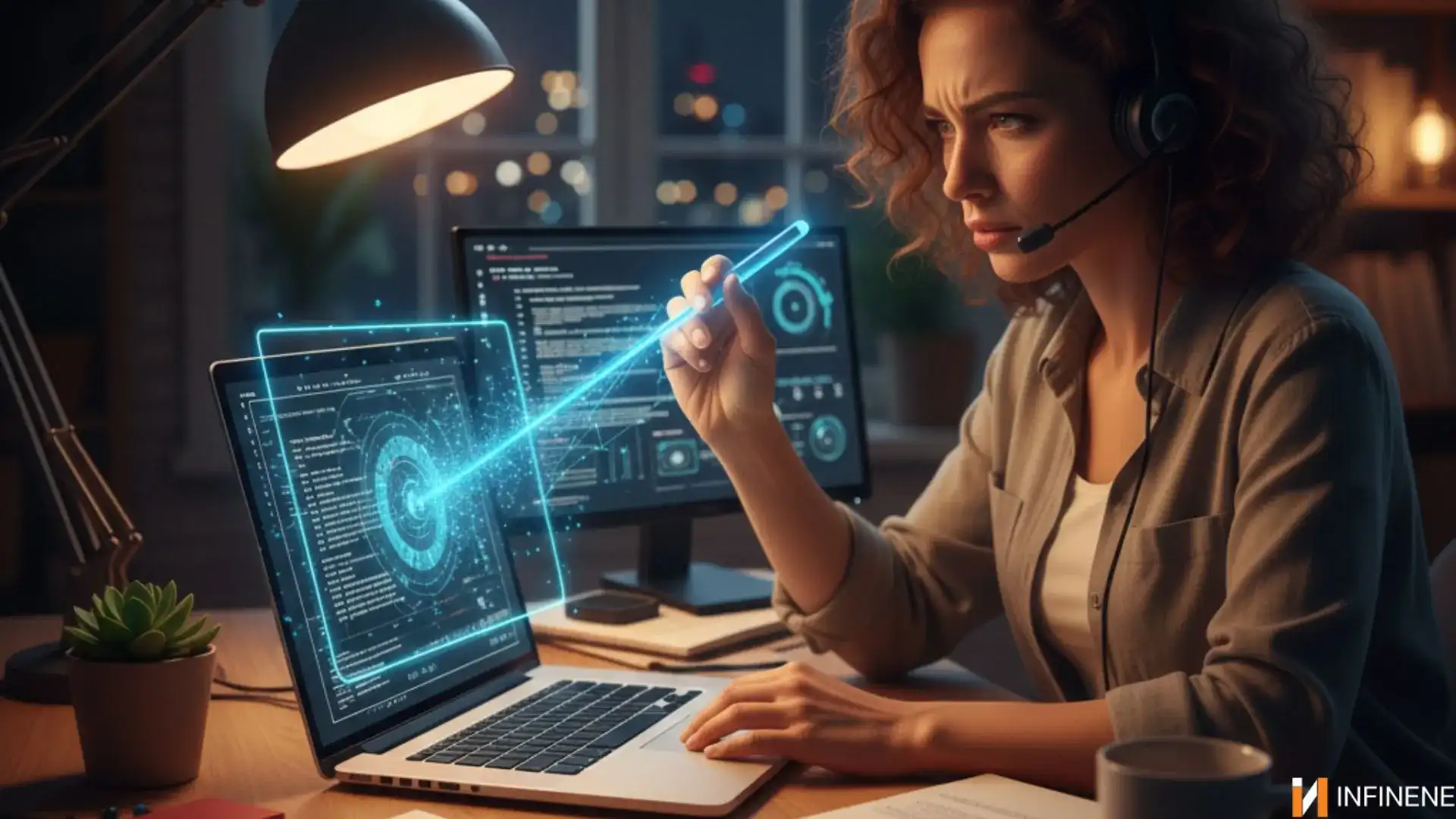
A while back, cyberattacks used to have a certain feel to them.
You could sense when something was off. It could be an email that sounded awkward. Or you get a login alert at an unusual time like 3 am from a country you’d never visited. Or the system slowed down in ways that felt clumsy. Cybersecurity attacks usually leave fingerprints and those fingerprints were somehow human.
This pattern has faded now. Today’s cyber threats don’t stumble. They blend in and learn. And that’s exactly why AI cyber attacks detection has become one of the toughest challenges security teams are facing right now.
The problem isn’t that attacks are louder or more aggressive. In fact, they are now calmer, smarter, and eerily patient.
Traditional cybersecurity relied heavily on patterns. Malware used to have signatures. They were detectable by repeated behaviors and predictable mistakes.
But AI has changed that equation.
AI-backed attacks now study the normal user behavior for weeks before attempting an attack. They learn patterns. Track how employees log in, which files they access, and what times they work. They even notice the small details like how fast an employee type. That's why, when the attack finally happens, it looks like a regular Tuesday mistake instead of a data breach.
And that's exactly why so many data breaches now go unnoticed. Nothing crashes or screams danger. By the time someone notices any issue, the damage has already been done.
We used to joke about bad phishing emails. The spelling errors, strange greetings and the very-obvious urgency. Those jokes aren't relatable anymore.
Phishing emails created by AI feel like messages coming from someone who knows you very well. They use the references of real projects, colleagues, and timelines. They mirror your company’s internal tone so closely that even cautious employees hesitate before questioning them.
What makes this more dangerous isn’t just the quality of the message, but it’s the scale. Attackers can now generate thousands of highly personalized emails without manually writing a single one. From an AI cyber attacks detection perspective, this is a nightmare.
One of the most serious things is that the AI-powered malware knows when not to act. Instead of acting immediately to exfiltrate data, AI-driven malware lies. It observes. It adapts. It waits until security tools are least active.
This patience makes detection incredibly difficult. Because security teams are typically looking for noise. And AI knows that.
Ironically, we’re collecting more security data than ever before. Everything from logs to alerts and telemetry to user behavior analytics, everything is being collected.
But more data doesn’t automatically mean better protection.
AI-generated attacks often create signals that are technically “normal.” No spikes or anomalies. Security teams end up buried in alerts while the real threat hides in plain sight.
This is where AI cyber attacks detection becomes less about tools and more about interpretation. The challenge is now to recognize subtle intent.
Addressing these vulnerabilities often requires the specialized eye of a cyber security consultant who can audit existing frameworks for AI-specific gaps. Relying on traditional antivirus is no longer sufficient, leading many organizations to adopt cyber security managed services that provide 24/7 eyes-on-glass monitoring. By combining human expertise with adaptive technology, these services can detect the "quiet" lateral movements that automated tools frequently miss.
There was a time when seeing was believing. Well, it’s over.
Voice cloning and deepfake video have entered the corporate threat landscape in a very real way. Executives’ voices can be replicated and video calls can be faked.
When someone can impersonate your boss with near-perfect accuracy, it becomes more about psychology than technicality. How do you flag a threat when the command sounds exactly like your boss?
There’s no easy answer yet.
Managing these invisible threats requires a shift toward more holistic business IT solutions that prioritize continuous monitoring over simple reactive fixes. Many organizations are now leaning on an experienced IT service provider to bridge the gap between basic security and advanced threat hunting. By leveraging comprehensive IT managed services, companies can ensure their IT support services are sophisticated enough to spot AI-driven anomalies before they escalate. Ultimately, implementing these types of integrated IT business solutions is no longer optional; it is a fundamental requirement for survival in a silent threat landscape.
The hardest part in AI cyber attacks detection is that the rules keep changing. AI models evolve constantly. They learn from failed attempts. They adapt faster than most organizations can update policies or train staff.
Detection used to be reactive. Something bad happened and defenses adjusted. That approach doesn’t work anymore.
AI doesn’t repeat mistakes. It refines them which means AI attacks detection can’t rely on previous assumptions. It has to be dynamic and deeply integrated into how people actually work.
The uncomfortable truth is that no one likes to admit that we’re entering an era where every attack won't be detected immediately. Some won’t even be detected at all. That doesn’t mean cybersecurity is failing. It means the battlefield has changed.
"Cyberattacks aren’t loud, they’re smart now."
Defenders now have to think like quiet observers, not just rapid responders. And until detection strategies evolve to match that intelligence, the most dangerous threats will continue to arrive without knocking and leaving without a trace.
Looking to harden your defenses against the next generation of digital threats? Contact the InfineneTech team today to learn how our tailored security strategies can protect your business.