


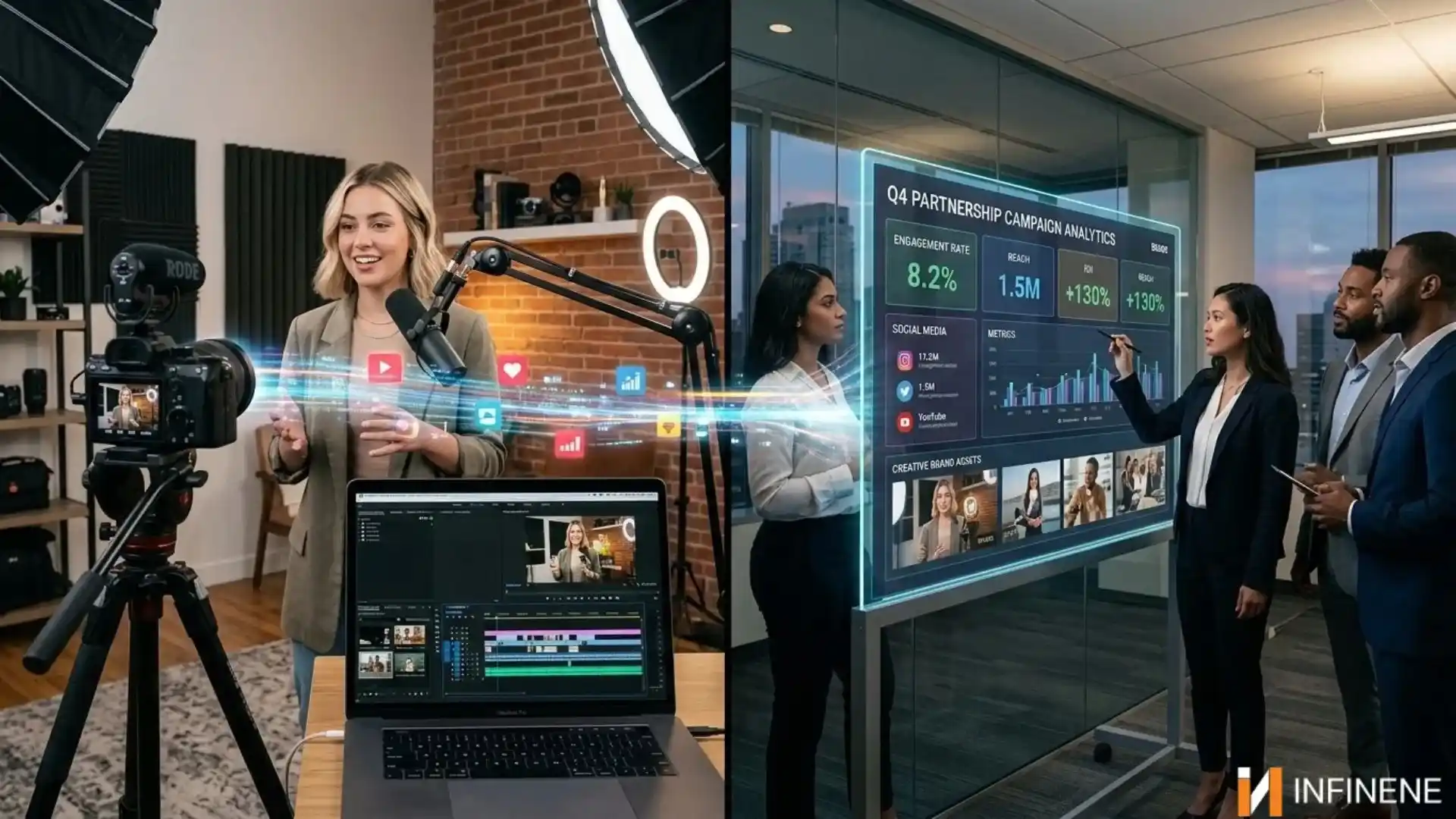
People use the term “digital creator” all the time. Sometimes they mean a YouTuber. Sometimes they mean someone who posts Reels. Other times they use this term for influencers and bloggers. Even designers and just anyone with a phone and an audience comes under the umbrella of this term these days.
That can get confusing. So, let’s keep it simple.
A digital creator is someone who makes content for platforms. That content can be a video or blog post. Podcasts and learning courses also come under the same category. Some creators also rely on livestream and social media posting. The goal is usually to teach or entertain. They generally influence a group of people and have an impact on their followers. In this guide you’ll learn what is a digital creator. We will discuss the different types of creators and how to become a digital creator. So, let's dive in to explore why businesses like working with online creators and what does a digital creator does.
A digital creator is a person who creates content and shares it on different digital platforms. This can include all social platforms including a podcast app or a personal website. A digital creator builds an audience with their work. Many digital creators earn money through brand deals, ads, subscriptions or by selling their products.
There is a common confusion about what a digital creator does and how a digital creator differs from a content creator and an influencer. The three terms overlap, Each term points at something different. A digital creator is the label.
A digital creator covers anyone who makes content from a YouTuber, to a designer who sells templates.
A content creator is about the work itself. They make content for an audience or for brands.
An influencer is about pull. People trust them. So, their opinions can change what others buy.
One person can be all three. But you can also be a great creator with a small following. You can create content without any plan to sell anything.
Most people only see the finished post. The work behind it is much bigger. Imagine a creator who makes cooking videos. On Monday she comes up with different recipe ideas. She checks what her viewers have been asking for. On Tuesday and Wednesday, she Edits. On Thursday she writes titles and captions. Schedule everything. While doing all that she replies to comments. At the end of the week, she checks her numbers to see which video performed best. In the middle of it all she also answers a brand that wants to work with her and takes care of the invoice.
That is the job. A digital creator comes up with ideas, gets the content published, talks to the audience, studies the results and runs the business side too. In short, they are the producer, editor, marketer and boss all, in one person.
There are different types of digital creators. The platform or content creation style may change. But the aim remains the same. Digital creators craft stories that feel relevant with their followers. Here are some types of creators that have been recognized as of now.
Bloggers write articles about a topic they know well. The topic could be anything. From travel to personal finance or parenting tips to technology, a blog can be created for any niche. A food blogger suggests good eateries. While travel bloggers may share city guides and hotel reviews. Similarly, other types of bloggers cover their niche. They can create personal websites or outsource their writeups to another company. Medium and substack, etc are also good platforms for bloggers to share their blogs.
Video creators make content for platforms such as YouTube and TikTok. They may make tutorials or reviews. They may also share vlogs or short educational clips. A fitness creator can post home workouts. They can also make longer videos about healthy habits.
Podcasters create shows. They may host interviews or just tell stories. They can also discuss news or teach a skill. A business podcaster can interview founders about how they grew their companies. Later the podcaster can turn clips from the episode into social media content.
Digital artists and designers create work. The digital artist can do illustrations, animations, social media graphics, logos, templates and digital art. An illustrator can share artwork on Instagram, sell printable designs or create visuals, for brands. The artist’s content often shows both the final work and the creative process.
Streaming is common in gaming. However, it is not the only choice. Some streamers hold Q&A sessions. Some teach skills. Some review products. Some chat with their community in real time. A coder might live stream while building an app. They can also answer questions from viewers.
Educational creators turn knowledge into lessons. They make courses. They can make ebooks. They can make templates. They can make workshops. They can also make tutorials. A social media teacher might show business owners how to plan content. They might also show them how to grow their pages. Their free content often helps people decide whether to buy a paid course.
You don't need tools or a lot of people watching to get started. You need a subject, a real group of people who care and a routine of making stuff. Let's explore a rather easier way of how to become a digital creator.
Check where your interest meets what people are actively searching for. The overlap will show where your interest matches people’s searching. Narrow this overlap until it feels almost tiny. Home espresso tuning and beginner web design are choices than broad labels like food or tech. Ask yourself if you could happily explore this overlap for the five years.
Imagine one individual who would benefit from your work. I imagine that person standing in front of a screen searching for answers. Note their age and daily routines. Keep an eye on the questions they type into search bars. Every idea you create should speak directly to that person.
Pick one or two platforms to post first. Sticking to one platform at the beginning helps stay focused. YouTube works well for telling video stories. LinkedIn is good for sharing work ideas. Instagram is best for pictures and short visual tales. Master one place before you go to another.
Plan your content. Choose three to five constant topics. Decide how often you will post. Each post should have a purpose. It might teach a skill. Lift people’s mood.
Regular is more important than perfect. Regularity helps people know when to look for a regular. It creates trust over time. It also tells the platform's systems that your channel is active. The platform then suggests you to others.
Make your work easy to spot in any feed. Use the colors and the same fonts across all your profiles. Keep your tone and style consistent. When your style stays the same people begin to recognize you. And they will ultimately follow you.
Treat your audience like people, not just like numbers. Respond to comments as soon as you can. Ask them what they think. Thank them for sharing their opinions. When you show that you value their time and attention, they will stay with you. They will trust you. They will share your work with others because they believe in what you do.
Check your analytics on a basis. Look at how people watch your content and how often they click. Also see which posts people save or share. These habits show what people really like so you can make more of that and stop doing the things that do not work.
When you have a group of people watching your content, look for ways to make money from it. Work with companies that have values as you. Sell things like templates or helpful guides. Use affiliate links for tools that you actually use and believe in. Having ways to earn money makes your income more stable, than depending on just one source.
You could recall many instances when you bought something because someone you follow mentioned it. It all comes back to trust. When someone I already follow gives a brand a thumb‑up I feel compelled to take that brand. I begin to think that this brand is worth checking out. That simple moment can change how I see the brand entirely. Trust matters more than ads or big names. It’s not about the message. It’s about who says it. Here is what businesses get from creator partnerships.
Access to niche audiences. Creators have built communities around interests. A brand can reach the people instead of everyone.
Authentic brand communication. A recommendation in a creator's voice feels natural. A polished ad often does not.
Higher engagement. People follow creators by choice and then they are more likely to comment, share and save.
User generated content. Creator posts show how real people use a product. That is useful for the brand.
Social proof. When someone trusted uses a product others feel safer trying it.
Expanding brand reach. Each partnership puts the brand in front of an already engaged audience.
Supporting social media campaigns. Creator content can give a launch. Promotion of extra energy across channels.
Creating marketing assets. With the usage rights a creator's photos and videos can be used again in ads, emails and, on a website.
Collaborating with creators seems simple. Send a product and receive a post. In reality outcomes rely on planning. Many companies lack the time to handle this internally. That is where a social media marketing partner becomes useful. A social media marketing partner keeps creator work organized and measurable by a random experiment. A solid social media marketing process typically covers these steps.
Finding the creators. Follower count is just one part of the picture. Content quality and engagement matter more.
Developing creator focused campaigns. I start with a goal, like raising awareness, driving website visits or boosting sales. Then I shape the campaign around that goal.
Creating content briefs. I share the messages, deadlines and must‑have items in a brief. I also give the creator freedom to use their style and that is why the content feels authentic.
Coordinating social media campaigns. I make sure creator posts line up with the brand’s channels timing and paid promotion.
Tracking. Conversions. I look at likes, comments, clicks and sales to see what each creator and each post actually delivered.
Repurposing creator content. I reuse posts in ads on product pages and in newsletters.
Measuring campaign performance. Compare the results with the set goals. Then you will know which parts you can repeat. It will also help you find the areas that you can drop next time.
These terms overlap, but they do not mean the same thing.
 FAQs
A digital creator is a storyteller. They take ideas. Turn them into things people can share online. They make everything, from videos to blog writing and recording podcasts to hosting livestreams. Their goal? To inform, entertain and bring people around their unique voice. They build communities, one post, at a time. It’s not about content. It’s about connection.
A digital creator does every piece of content creation. From the first idea to the final post that goes live. They plan each step. They shoot the footage and edit it carefully. Then they publish it to the world. They also promote their work. Stay connected by chatting with their followers. They look at the numbers to understand what works and improve over time. Many of them team up with brands turning their skills into a real career.
Start by finding your niche. Then learn about the people you want to connect with. Find the platforms where they spend their time. Make a plan for the content you will share. Be there regularly. Talk with the people who are watching. Listen to what they say in every comment and chat. Let what happens help you make better posts each time.
A digital creator pours energy into crafting content himself. While an influencer turns the audience-reach to sway opinions and buying choices. A digital creator often grows into an influencer once a following believes in a creator but plenty stay behind the camera and simply make great work.
Creators can make money by using ways like working with brands using affiliate links, getting money from ads and having paid memberships. Creators also sell things, like products, online classes, services and items to earn money from the people who follow them. The best creators use different ways to earn money so that they are not depending on just one source.
Brands bring creators on board for sponsored posts and product reviews and affiliate campaigns. They also ask them to help with user generated content and ambassador roles. They use them for bigger social media pushes too. These partnerships work well when the instructions are very clear. They also track the results so both sides can see what actually works.
For businesses a digital creator can help reach people without sounding like an advertisement. The trick is to choose creators who feel like a match, for the brand. Then support the partnership with a social media plan.
If you want creator partnerships to be part of your marketing, take a look at InfineneTech's social media marketing services. A clear strategy can help your brand reach the right people.