



Blog Details
HomeBlog Details
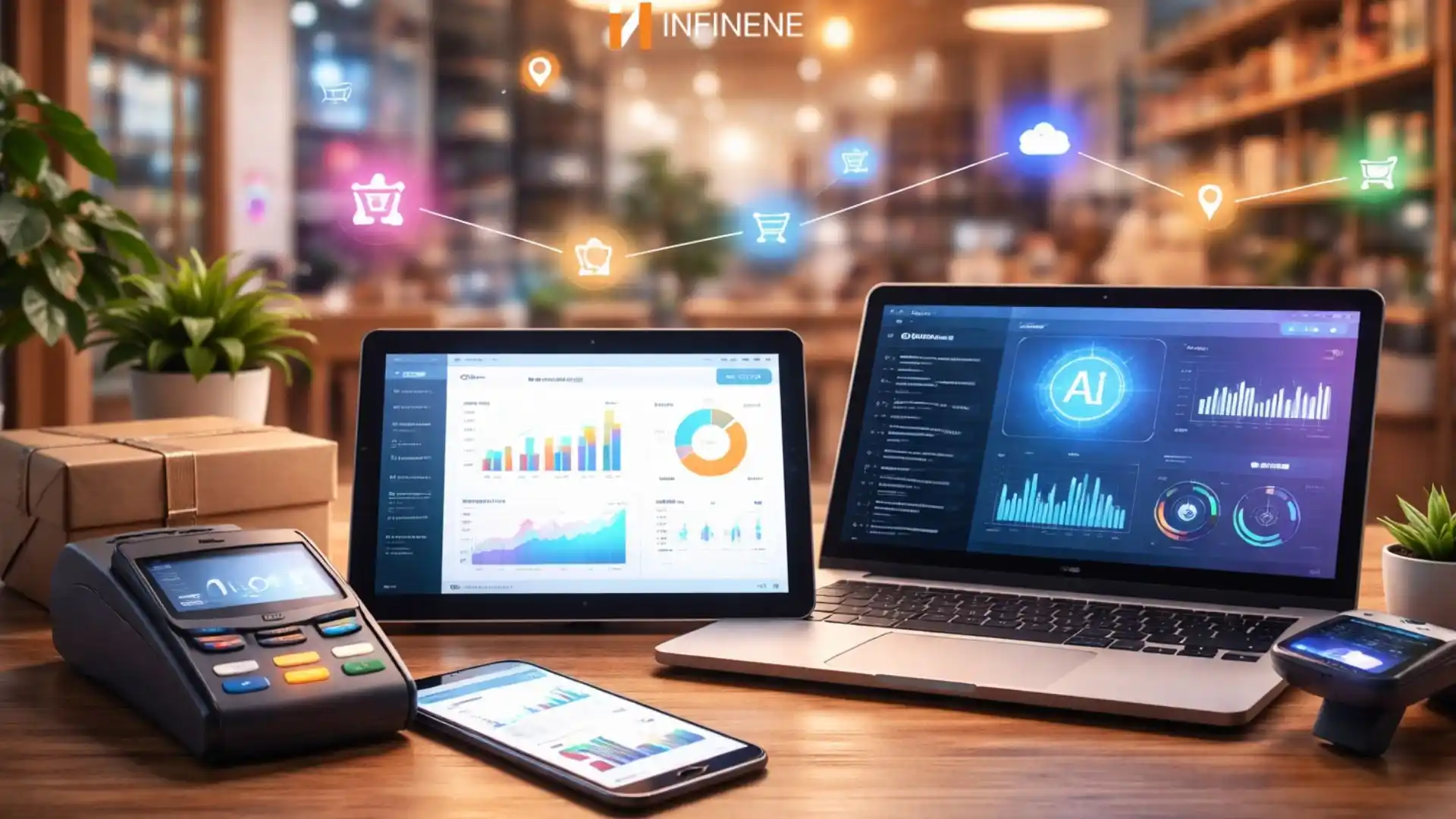
How AI Is Changing Small Businesses in the US - 2026 Outlook
Step into any US neighborhood and you will see the impact of technology. Small family-owned diners are now using tablets instead of paper tickets for their orders. Local property dealers are posting high-quality, AI-edited videos on their Instagram business accounts. Small e-commerce shops are delivering their products all over the US right from their garage. Artificial intelligence is no longer a “big tech thing.” It has become an integral part of everyday business life for small and medium-sized companies throughout the US.
The AI era that started with tech giants is now all over the retail world. Now there is no need to hire expensive experts or invest in costly technologies just to maintain the status quo. Many companies across the US have already adopted a smart and practical way of scaling up, which involves the combination of AI tools along with the use of offshore tech services.
Let’s analyze the AI impact on US small businesses in 2026 and the reason this change looks like it is made for the American business method.
AI Tools Are Business Essentials Now
Nowadays, AI is an integral part of the tools that are used by business owners. The CRMs will give you the best time to call the client and follow up. The accounting software will warn you about upcoming cash flow problems before you realize it. The marketing platforms will write ad copy for you, test it, and even do the optimization automatically.
For American small businesses, this is a revolution. Time equals money, and AI gives both back.
Late nights for number crunching or drafting emails are not necessary anymore. Business owners can now devote their attention to primary business values like relationships, service, and growth. Artificial intelligence takes care of repetitive tasks, working silently in the background like an extremely efficient and always-on assistant.
Customer Experience Is Becoming Smarter and More Personal
The Americans want quick responses, personalized service, and no hassle. AI is setting the standard for the year 2026, where even small teams will be able to offer great customer experiences.
AI-enabled chat services are available to customers around the clock. But they do not come across as machines anymore. They grasp the tone, the intention, and even the local slang. A customer from Texas will be treated with a different conversational style from one from New York.
Online shops are personalized by recommendation engines according to consumers' browsing habits. Reminder systems notify customers, leading to fewer no-shows. Feedback analysis systems are reviewing and reading emails to detect changes in customers’ views. As a result, companies become more responsive and professional.
Marketing Is Getting Faster and Surprisingly Creative
Marketing was once one of the biggest headaches for small businesses in the US. Agencies were expensive, freelancers were hit-or-miss, and doing it yourself took forever. AI flipped that script.
Now, AI-powered solutions help generate blog drafts, social posts, ad variations, email subject lines, and even short videos. But the real power is in optimization. AI doesn’t just create, it learns. It figures out what your audience clicks on, what converts, and what falls flat.
This is very important for US companies that are fighting to be heard in such saturated markets. They will be able to do tests and campaigns very quickly and will get more out of the money they spend.
A lot of American firms combine AI technologies with offshore experts who edit and improve the content, control the campaigns, and make sure everything is in line with the company's image and local market expectations. This approach makes marketing smooth, efficient, and economical.
Business Operations Are Becoming Smarter and More Predictable
The cost of running a small business in the US is incredibly high. Labor costs, compliance, inventory, and logistics are just a few of the expenses that pile up very quickly. AI is a great help to businesses in operating with fewer resources and still providing the same quality of service.
There are various AI tools available when it comes to inventory management and stock forecasting. Similarly, staff scheduling systems ensure compliance with local labor laws. AI-powered analytics detect inefficiencies in the business operations. Businesses can also personalize these systems without the necessity of having full-time specialists.
Read more: Mobile App Industry Review 2025: What Actually Happened This Year
Hiring Looks Different in the AI Era
One of the most significant transformations of 2026 is the change in the perspective of US small businesses towards labor. The main issue is not that they have to get more workers. The point is that they have to get the right ones.
AI takes care of the jobs that were traditionally done by juniors, like data entry, report generation, etc. This allows the teams to remain lean and concentrate on the most important activities, such as developing the company's strategy, selling, and building relationships.
At the same time, a number of firms are bringing in overseas manpower to help them with their AI-operated functions. Software engineers, quality assurance testers, data scientists, and support personnel work with the AI to keep the whole process running smoothly.
This mixed model supports American business culture very well. You get the finest of both worlds without draining your wallet.
Decision-Making Is More Data-Driven and Less Stressful Now
Intuition still plays a role in business, but in 2026, small US business owners will use data to support it. AI dashboards now explain complicated metrics in a very simple way. Instead of looking for patterns in numbers, the owners get the insights very clearly.
This not only cuts the risk but also the tension. Having AI-backed transparency is like a safety net when you are processing payroll, managing expansion, and dealing with economic uncertainty situations.
Read more: Smart Tech Investments Businesses Should Make This Christmas and New Year 2026
Offshore Tech Collaboration Is Becoming Easier and Seamless
Offshore services used to be perceived as distant, risky, and disconnected from US business practices. This perception has changed in 2026. Teamwork, workflow sharing, and AI-aided communication have made offshore teams feel like a part of the in-house personnel. The differences in time are handled smartly, and the quality is controlled.
Small businesses in the US can now access the talent of the entire world, and at the same time keep control and culture intact. Initially, it was about outsourcing to the cheapest location. Now, it is about creating smarter and more resilient companies.
AI is not a threat to small businesses in the US, it is rather an enabler.
It’s time for the local brands to compete with the national ones. Founders will have more time to think. Data will be turned into insights, and technology will become a real partner.
The most successful US small businesses in 2026 are not necessarily going to be the largest or the most extravagant ones. Rather, the companies that will be able to use AI wisely, combine technology with human knowledge, and remain faithful to the American way of doing business will be ahead of the game.
In the present state of business affairs, working smarter is not an option, it is the way to survive and even to win.
Take the next step toward smarter growth. Contact us today to explore AI-powered solutions tailored for your business.